
E-Tabs

ETABS (Extended Three-Dimensional Analysis of Building Systems) is a specialized software tool used extensively in the civil and structural engineering industries for the analysis and design of buildings and structural systems. It offers advanced capabilities for modeling, analyzing, and designing high-rise structures, residential buildings, industrial facilities, and more.
1. Overview of ETABS in Civil Engineering
ETABS provides civil engineers with the tools to:
- Analyze complex building geometries.
- Perform structural analysis for gravity and lateral loads (wind, seismic).
- Design reinforced concrete, steel, and composite structures in accordance with international design codes.
- Conduct dynamic analysis to understand how structures respond to time-dependent loads like earthquakes.
Practical Applications of ETABS in Civil Engineering
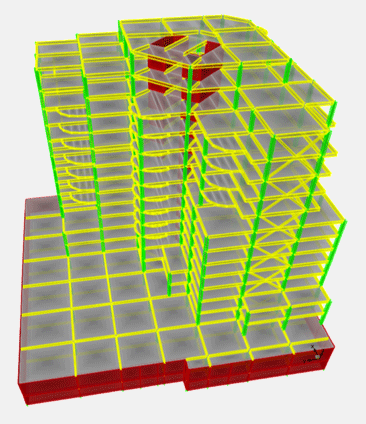
1. Building Design
ETABS is extensively used in designing high-rise buildings, residential complexes, and commercial structures. Its ability to handle large models with complex geometries makes it ideal for skyscrapers.
2. Seismic Design
ETABS is especially useful for seismic analysis. It includes advanced features for response spectrum and time-history analysis, which help civil engineers design structures that can withstand earthquakes.
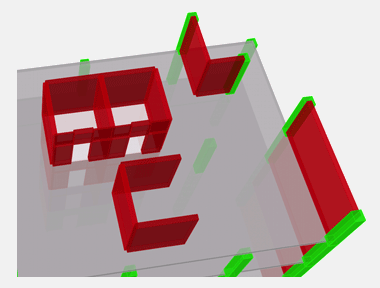
3. Wind Load Analysis
For buildings in regions with high wind loads, ETABS can analyze how the structure will respond and help in designing wind bracing systems and shear walls.
4. Industrial Structures
ETABS can be used to design industrial facilities, including warehouses and plants, where large open spaces require careful attention to lateral load resistance.
ETABS is an essential tool for civil engineers, particularly when dealing with complex structural designs and large-scale building projects. It offers powerful analysis and design capabilities, helping ensure that structures are safe, efficient, and compliant with code requirements.